farmyard.im
The wheat area fell, and the harvest rose
In 2026, England’s wheat fields shrank — and yet the barns filled a little more. The official area “decreased by 1.8% to 1.5 million hectares,” after a bigger year in 2025. Then, in October, the provisional English harvest came in at 10.8 million tonnes, up 0.8%, “due to an increase in yield counteracting the decrease of planted area.” Less land, a little more grain.
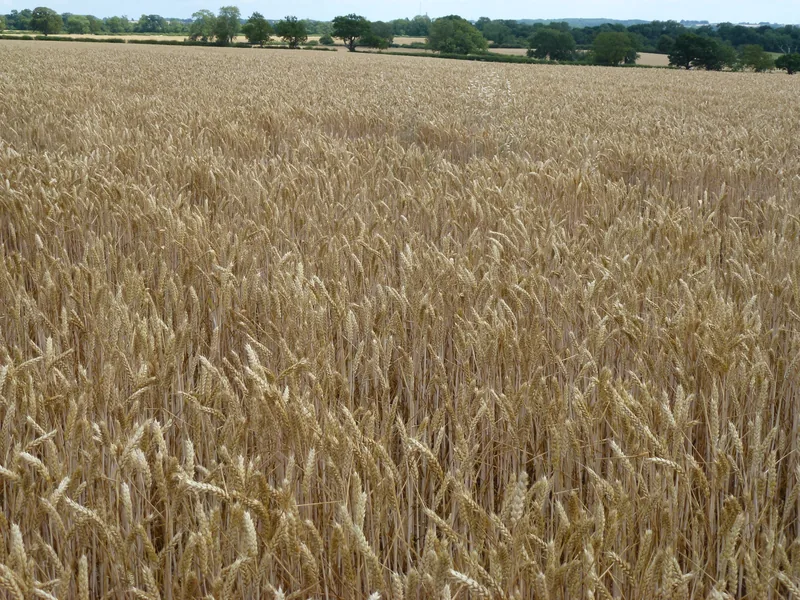
A field ready to harvest at Woodnewton is one crop, on one July day. The official story is made of two later publications: a final June area, published in August, and a provisional harvest, published in October. They can move in different directions, and in 2026 they did.
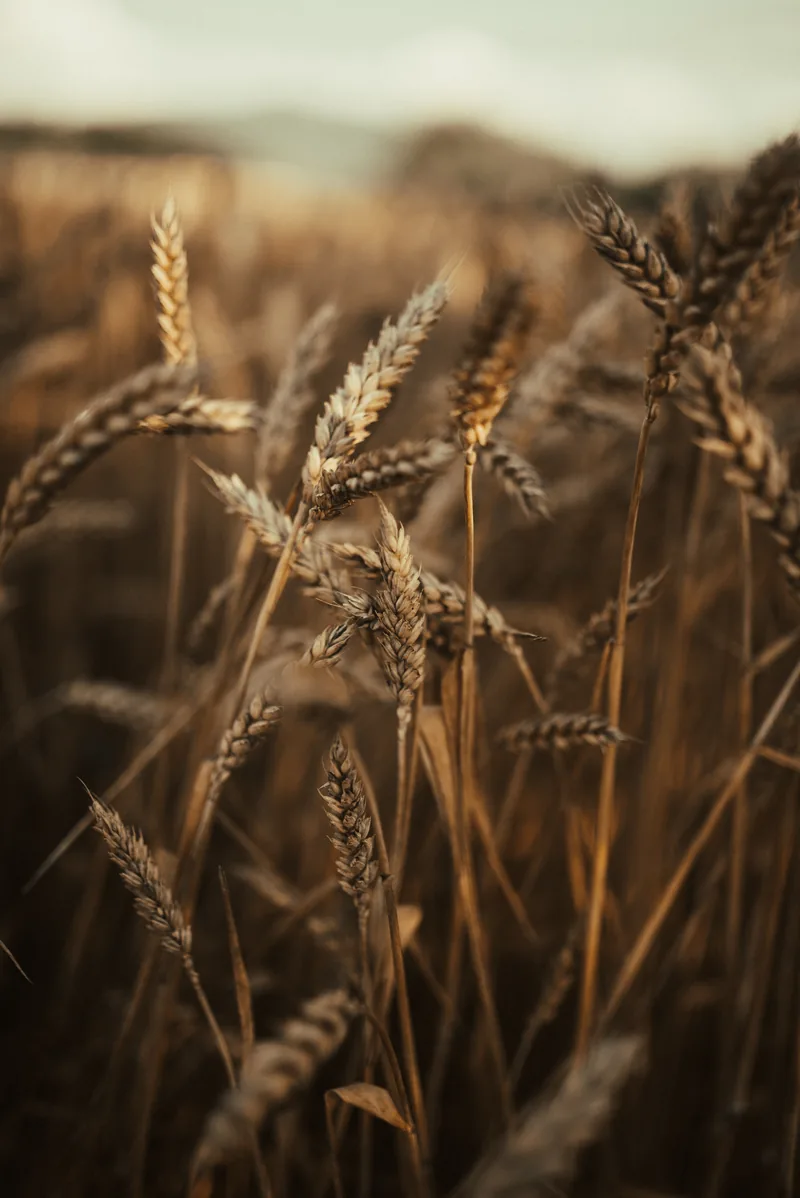
The yield is the missing piece. Overall it “increased by 2.7% to 7.2 tonnes per hectare (t/ha),” “in all regions, apart from East of England and South East.” The highest official yields “were seen in the North East (8.4 t/ha).” Yorkshire & the Humber saw the largest rise in production, 6.5%. Two regions, the Eastern region and the East Midlands, “together grow almost half of the wheat in the country.” [source] [source]
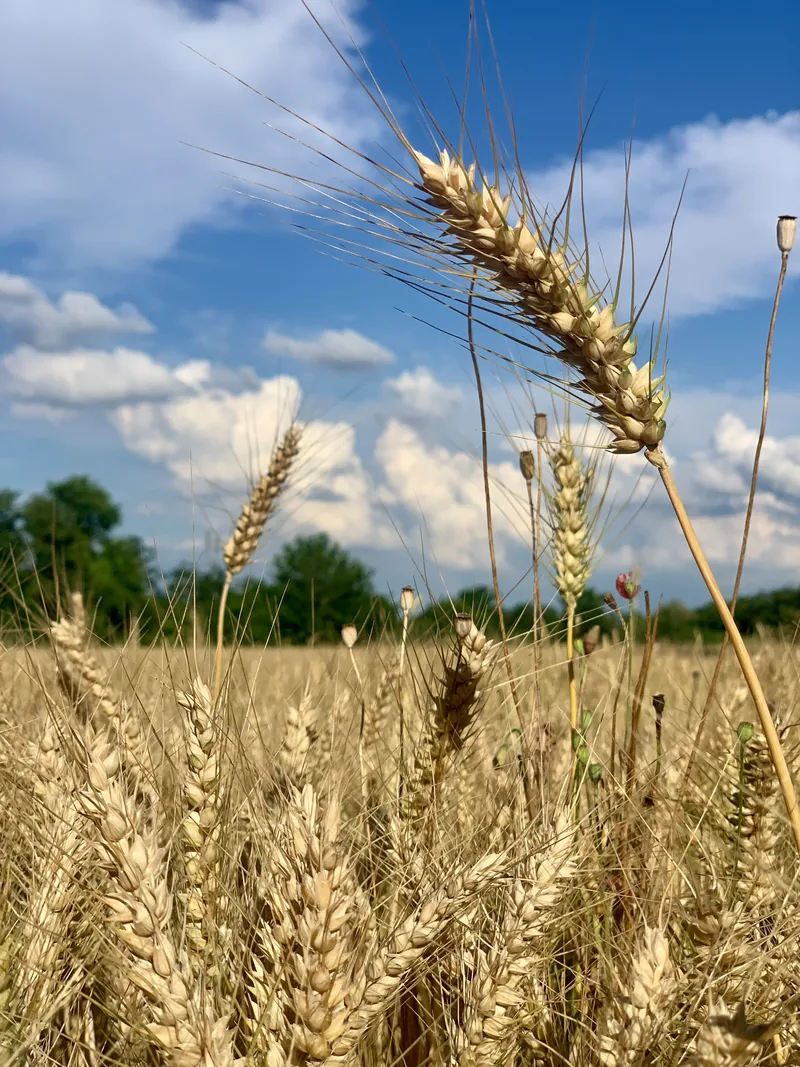
The photographs on this site come from England, Italy, Belgium, Australia and the Palouse. They are licence-checked pictures of real fields, not official hectares, and not official tonnes — and they are here because wheat, once you look closely, is a beautiful crop.
Where to start
- The harvest 10.8 million tonnes, a rising yield, and a notice that is not yet a United Kingdom total.
- The area desk Why the fields shrank, why the grain still rose, and which two regions grow almost half of England’s wheat.
- Discoveries Favourable autumns, uncropped land, high yields in the North East, and a few photograph stories.
- The official figures Areas, yields and tonnes, from the notices that published them.
- Facts A long file of figures, stories and photograph notes.
- Myths versus facts What people assume, and what the record actually says.
- A quiz and a timeline Test yourself on the harvest, the yield, and a few surprises.
- Free fact sheets Three typographic PDFs, in A4 and Letter, with no photographs inside.
Keep exploring
Enjoyed the field?
No pop-ups. No intrusive advertising. Just interesting stuff. A little support helps the next farmyard site get built.